
Case study, commercial and industrial waste sorting facility
Characterising commercial waste continuously
How GreenRécup’ equipped its Argenteuil sorting facility with two analysers, to read its waste streams precisely, spot the material that escapes it and guide its next investments.
The context
Mixed skips, material to be recovered
Founded in 2011, GreenRécup’ collects and recovers waste from businesses, from the Val-d’Oise to the Gironde by way of the Eure. Its Argenteuil sorting facility, opened in 2024, processes non-hazardous commercial and industrial waste. It is one of the few facilities of this type in France to be so highly mechanised: a trommel and many conveyors, like a packaging sorting facility.
95% of its customers are private businesses (logistics, catering, hotels, retail, supermarkets) that do not always have the means to sort at source. Skips therefore arrive mixed. The challenge is to extract as much material as possible: paper, cardboard, plastics, wood, metals, glass, textiles. What cannot be recovered goes to incineration or landfill.
The site reports a material recovery rate of 60 to 70%. Every point gained on residues is that much more material diverted from these outlets.
The regulatory framework adds to what is at stake. Extended producer responsibility (EPR) for commercial and industrial packaging has been in force since 1 January 2026; its operational implementation was set for 1 January 2027 by the French Ministry for Ecological Transition, and three producer responsibility organisations were approved in June 2026. The sector will need to know what the collected waste streams really contain.
The system
Two analysers, two questions
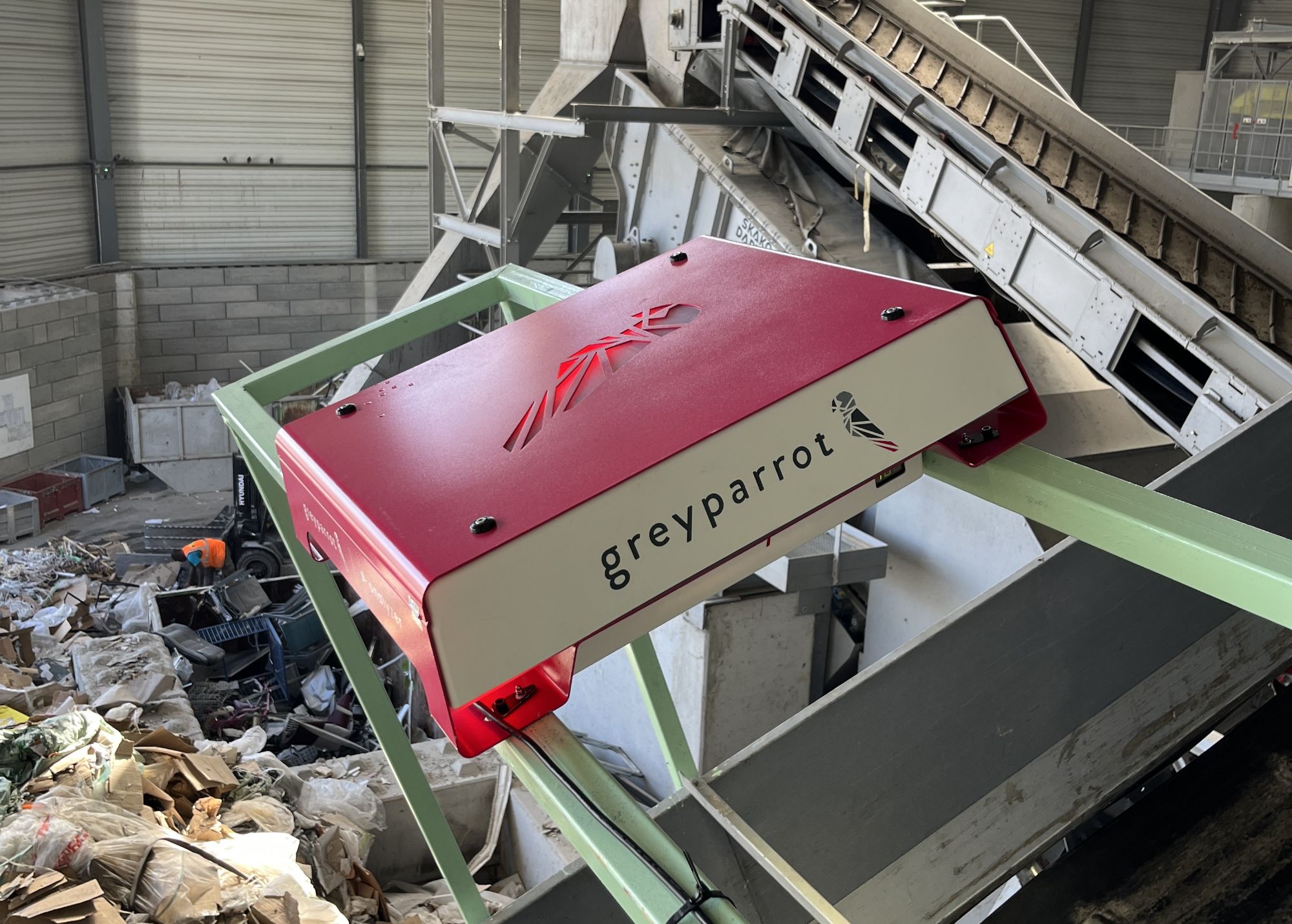
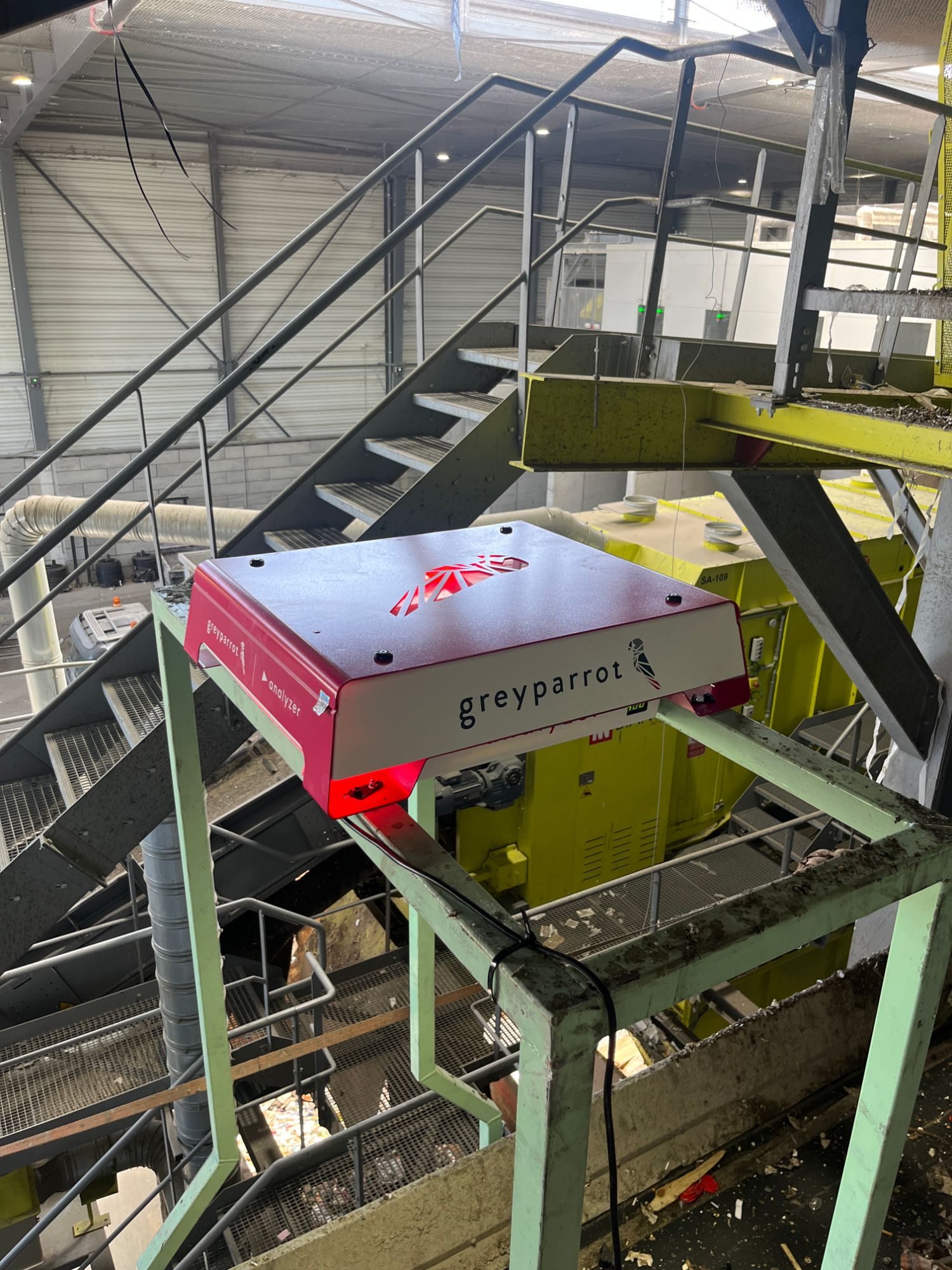
In summer 2025, NextWaste installed two AI vision analysers on the sorting line, above the conveyors. They take no part in sorting operations: their role is to measure.
- Incoming waste
- Just after the infeed hopper, the analyser continuously reads the composition of the waste stream. It sheds light on its impact on process performance and on manual quality control in the cabin.
- 40-180 mm residues
- Further downstream, on the residue line for this fraction, it estimates the proportion and quantity of recoverable materials that slip through the screens: rigid plastics, aluminium, cardboard.
Day-to-day work
Linking measurement to operating decisions
Measuring the capture gap
At the end of the day, the gap between the recoverable material measured at the infeed and the tonnages actually produced shows the room for improvement. It makes it possible to consider re-runs, that is, recirculating the residues.
Adjusting sorting settings
Some variations in the waste stream disrupt the line, such as jams when there is a lot of fibre-based material. Spotting them makes it possible to correct the sorting recipes before they affect production.
Assessing useful equipment
On the 40-180 mm fraction, the quantity of metals and plastics escaping sorting makes it possible to assess with the operator the value of an eddy current separator, an overband magnet or air jet ejection. The return on investment estimate is then based on quantities measured on the belt; the other parameters remain assumptions to be documented.
Characterising by waste supplier
Time-stamped measurements and automated reporting make it possible to link the composition of the waste stream to a supplier, when their deliveries can be tracked to the line without mixing or intermediate storage: a factual basis for commercial dialogue as well as for traceability.
Testimonial
In Kevin Saadoun’s words
“Our first objective is to read precisely the waste streams that pass along our sorting line, and to capture those that still escape us.”
“For now, these analysers do not make us money: they give us the data that will guide our future investments.”
“On commercial and industrial waste and EPR for commercial packaging, we want to be pioneers in analysing our waste streams.”
What next
From measurement to shared management
The next step is to bring the data closer to those who sort, and to draw investment decisions from it.
Informing the cabin
Only a few minutes separate the hopper from the cabin. Sharing the trend of the incoming waste stream would let sorters know what to focus on: cardboard, wood, film.
Deciding on investments
Assess, with data to back it up, additional equipment on the 40-180 mm fraction.
Documenting for EPR
Build up continuous, historical data, useful for dialogue with producer responsibility organisations.
Reading guide
The limits to bear in mind
- The analyser does not measure moisture: a soaked carton and a dry one look alike, which can distort the mass estimate. The effect remains limited at this site, where other predictions compensate; it would be more noticeable on a very fibre-rich waste stream.
- It identifies the objects visible on the conveyor; reliability is built through cross-validation with manual characterisations.
- The figures produced by the measurement are not published at this stage.
Do you sort commercial and industrial waste?
Let’s talk about your waste streams, your waste suppliers and the useful measurement points on your line.
Other case studies
Testimonial from Kevin Saadoun, President of GreenRécup’, 2026, translated from French. EPR timetable: press release from the French Ministry for Ecological Transition of 28 July 2026.