
Case study, sorting facility for separately collected recyclables
Objective data for a better dialogue
How SPL Allier Tri obtained continuous and independent data on its waste streams, to prepare the renewal of its operating contract.
Jackie Renaud, Managing Director, SPL Allier Tri
The context
Preparing a tender on a solid basis
After nearly seven years of operation, Allier Tri is preparing the renewal of its contract. Before launching the tender, the SPL wants to know the real waste stream over the whole year: its seasonality, its variations and how the process actually performs.
The manual characterisations provided for in the contract do not allow this. They cover less than 10 t a year, out of 20,000 t processed: a sample that may already be biased. The SPL also wants to check a common assertion that the waste stream changes a lot.
Finally, there is an investment question. Unlike other sites, no sorter is assigned to the residue belt. Should an extraction tool be planned, or should the residues go through the cabin?
In the context of a tender, one requirement stands out: the data must be independent of the current operator.
The system
Two measurement points, independent data
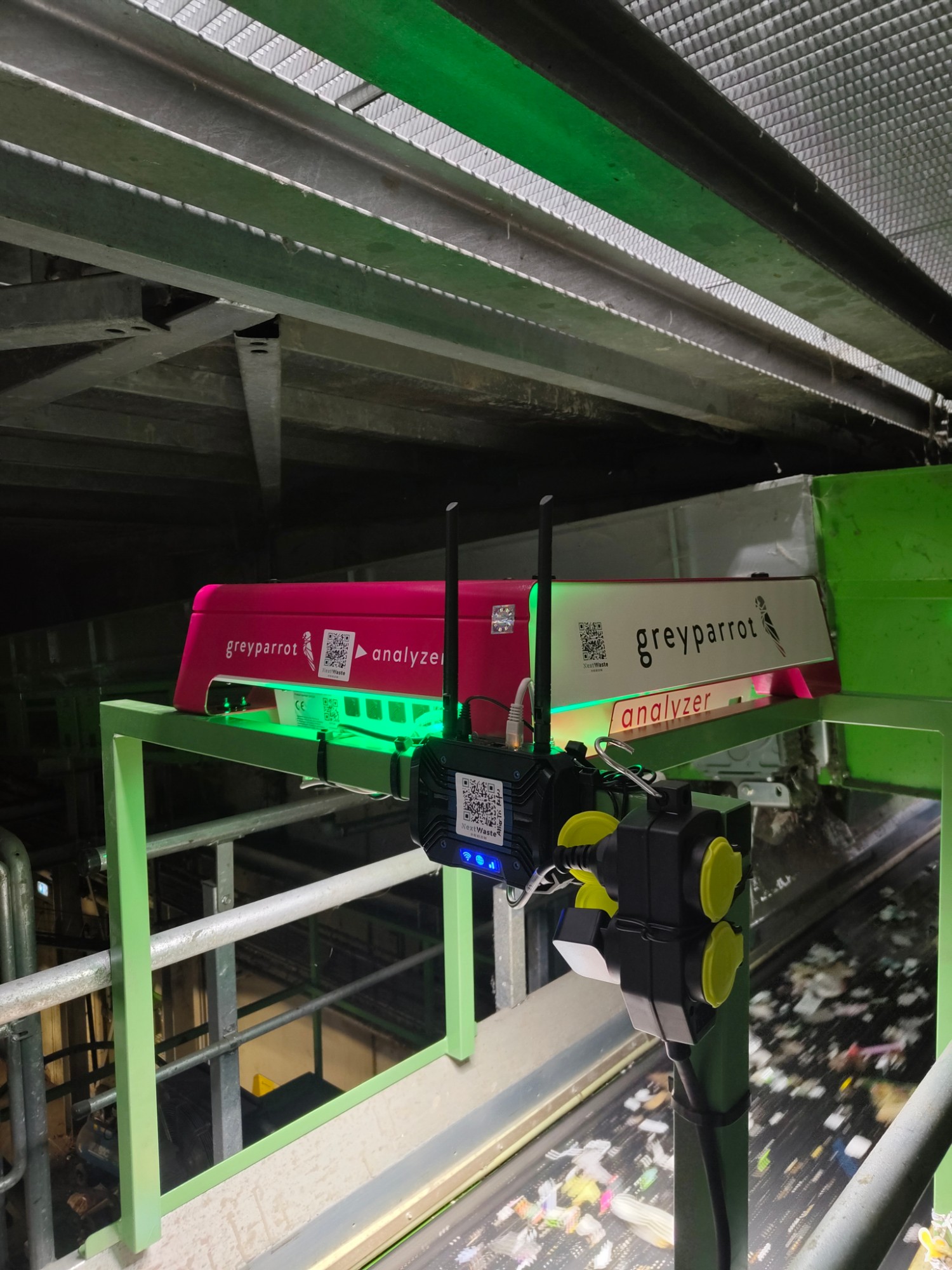
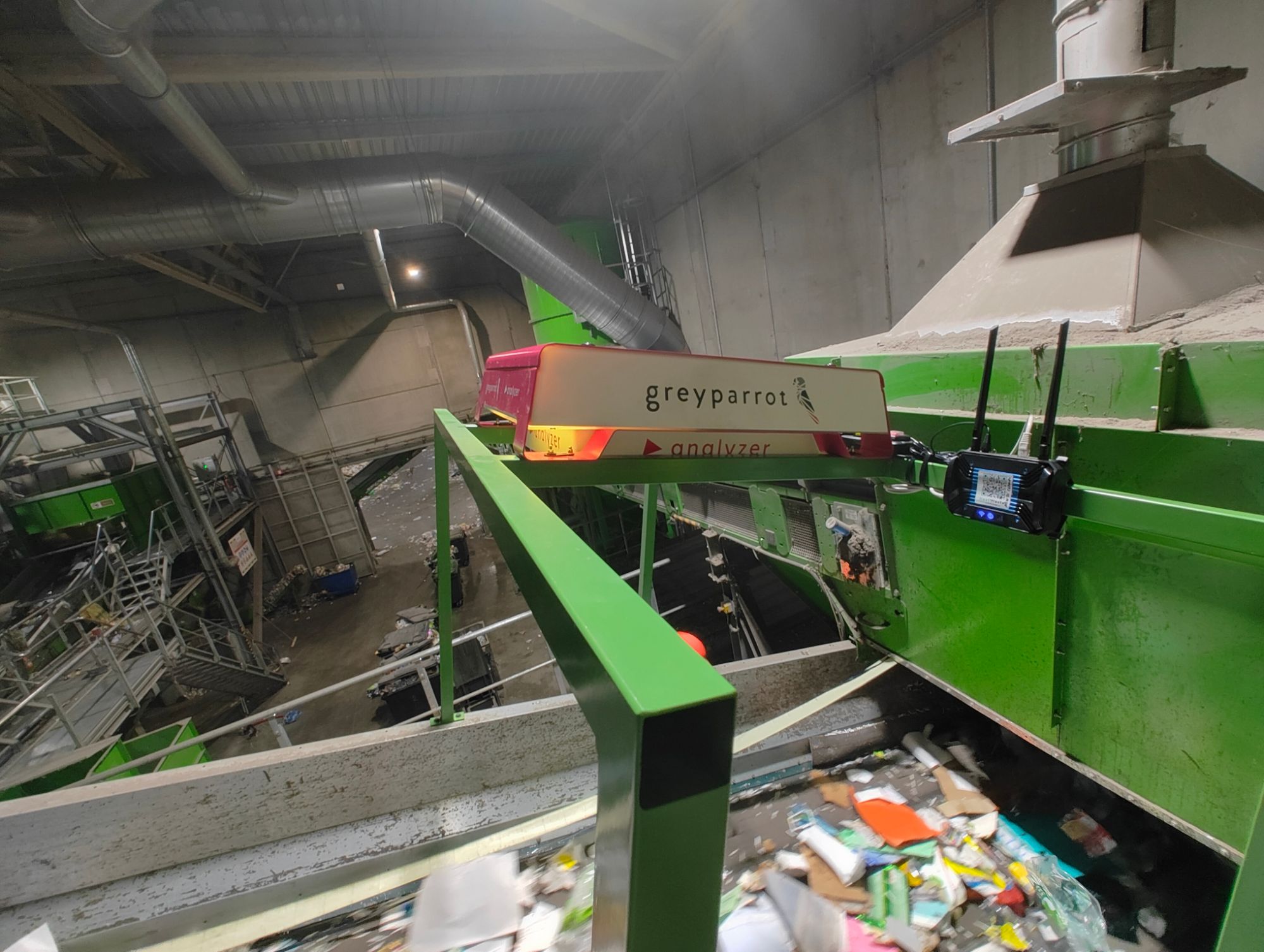
The SPL chose to limit itself to two lines, to keep costs under control and to learn how to use the data before going further.
- Infeed
- to monitor the composition and throughput of incoming waste, hour by hour.
- Residues before the cabin
- to understand how the process works and assess the recoverable materials lost.
- Installation
- frames made by a local company; the internet connection took longer than setting up the two cameras.
- Two months
- of calibration, cross-checked characterisations included, between installation in early December 2025 and usable data.
Day-to-day work
A shared grid, reports, alerts
Aligning the classification grids
Two people do not always classify an object in the same way. Before automating, NextWaste brought the SPL and the operator together to review the whole characterisation grid, category by category.
“We went through the whole classification grid together; we took a short afternoon with the operator to agree on where each object goes.”
Making the data readable
Like many local public companies, Allier Tri works with a very small team. At the start, NextWaste produced almost daily reports to isolate the useful signals, then helped to interpret them.
Turning an observation into an alert
By cross-referencing throughput and composition over the same morning, the reports revealed strong fluctuations at the infeed, invisible in monthly averages. A throughput threshold was defined: above it, an SMS alert notifies the SPL and the operator, who can act without waiting. What is at stake is the availability of the line, an essential element of a sorting facility.
What the data reveals
Drifts finally visible, and an investment assumption called into question
Continuous analysis since the end of calibration, in early 2026. The adjustments envisaged for the next operating contract will focus on upstream processes rather than on the residue line alone.
Testimonial
In Jackie Renaud’s words
“I am convinced that these tools will help us work better together, because the local authority and the operator will have the same data. And having a third party involved means nobody can say that it was one or the other who produced the data.”
“Allier Tri’s objective is not to monitor the operator, but to understand, in order to launch a tender and improve the treatment of separately collected recyclables.”
“Perhaps we should not invest in this line straight away, contrary to what we had imagined.”
“The experience is worth trying, because you get data that I was not expecting.”
What next
Towards wider sharing of the data
The operator’s initial reservations about the residue analyser were overcome through use. The next step is to bring the data closer to those who act on the line.
Alerts in the cabin
A screen showing alerts directly to the operators, so that they can act on the process in real time. The project is under discussion.
Sizing the future contract
Build up, month after month, a history of continuous data, in addition to the annual characterisations, to be shared with the future operator.
Measuring the impact of changes
Monitor the effect of each process adjustment, upstream as well as on the residue line.
Reading guide
The limits to bear in mind
- A camera does not measure the moisture of incoming waste, which can nevertheless affect the process.
- An alert only has an effect if the organisation can respond to it: with a fixed headcount, reassigning an operative during a shift is not always possible.
- Too much data kills data: the value lies in choosing a few useful indicators and thresholds.
Preparing to renew a contract?
Let’s discuss what you know about your waste streams and a system suited to your site.
Other case studies
Testimonials gathered at the NextWaste webinar “IA en centre de tri : retours d’expériences de l’analyse continue” (AI in sorting facilities: feedback on continuous analysis), held in French on 17 September 2026; the quotes on this page are translated from French.